S-Equol: Why Fermentation-Derived Beats Plant Extracts for Supplement Formulators
What Is S-Equol and Why Does It Matter?
S-Equol (CAS 531-95-3) is a non-steroidal isoflavandiol produced by intestinal bacteria from the soy isoflavone daidzein. It binds preferentially to estrogen receptor beta (ERβ), making it highly relevant for formulations targeting menopause symptoms, bone health, and cardiovascular support in women. Critically, only about 25–30% of Western adults and 50–60% of Asian adults produce S-Equol naturally through gut metabolism — making supplemental S-Equol a direct, reliable alternative for the non-producing majority.
The Core Problem: Plant Extract vs. Fermentation-Derived
There are two ways to source equol: racemic extraction from kudzu or soy, or pure S-form via microbial fermentation. The difference is significant:
| Plant Extract (Racemic) | Fermentation-Derived (PathGene) | |
|---|---|---|
| Isomer composition | ~50% S-Equol + ~50% R-Equol | ≥98% pure S-Equol |
| Biological activity | R-Equol has negligible ERβ activity | All active — no inactive ballast |
| Effective dose | 10–30 mg (double to compensate) | 5–10 mg equivalent efficacy |
| Purity | Variable, depends on extraction | ≥98.0% by HPLC |
| Batch consistency | Seasonal variation in plant material | Controlled fermentation, consistent |
| Regulatory positioning | Complex natural extract claims | Single defined molecule — cleaner label |
Fermentation Process: Why It Yields Pure S-Form
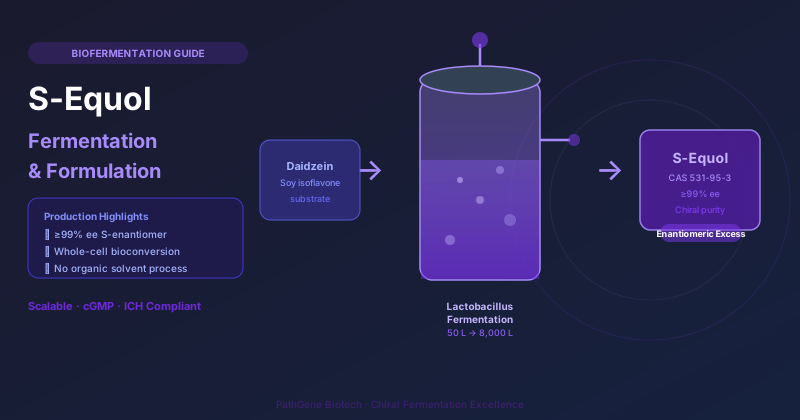
PathGene uses a proprietary strain of Lactobacillus-based whole-cell bioconversion system to convert daidzein to S-Equol with high enantioselectivity. The fermentation process is stereospecific — only the naturally occurring S-configuration is produced, mirroring the human gut microbiome conversion pathway. The downstream purification uses preparative HPLC and recrystallization to reach ≥98.0% enantiomeric purity.
Clinical Applications by Target Market
- Menopause symptom relief (HOT FLASH RELIEF): Multiple RCTs show 10 mg/day S-Equol reduces hot flash frequency and severity. The most referenced study (Aso et al., Menopause 2012) showed 58.1% reduction in hot flash score vs placebo.
- Bone health: ERβ activation supports osteoblast activity and suppresses osteoclast-mediated bone resorption. Relevant for 45+ women's supplements targeting osteoporosis prevention.
- Skin: 0.5–2.0% S-Equol in topical application shows increased collagen synthesis and reduced photo-aging markers in clinical studies. Relevant for cosmeceutical formulators.
- Cardiovascular: ERβ-mediated vasodilation and reduced LDL oxidation markers observed at 10–40 mg/day in postmenopausal women.
Formulation Guide
S-Equol is lipophilic. Key formulation considerations:
- Softgel: Ideal delivery — oil-based fill (MCT or sunflower oil) maximizes absorption. Typical fill: 5–10 mg S-Equol per softgel.
- Capsule: Use micronized S-Equol with a lipid carrier (phosphatidylcholine or lecithin granules) to improve dissolution.
- Topical: 0.5–2.0% in emulsion base. Stable — does not oxidize as rapidly as estradiol. Compatible with ceramides, niacinamide, and peptide formulations.
- Tablet: Requires lipid granulation step; not recommended for standard direct compression.
Regulatory Positioning
- US: Dietary supplement ingredient (no NDI filing required; existing DSHEA precedent). GRAS self-affirmation applicable.
- EU: Novel Food application is required. PathGene can provide technical dossier support for NF submissions.
- Japan: Classified as Food with Functional Claims (FFC) category. Specific health claim for menopause is supported by systematic review.
- China: Health Food ingredient eligible under NHSA catalog. PathGene holds the China regulatory compliance documentation.
Why PathGene S-Equol
Our fermentation platform (Lactobacillus, Hyphomicrobium, recombinant E. coli) produces S-Equol at ≥98.0% enantiopurity, 20 MT/year capacity, with year-round supply consistency that no plant extraction operation can match. Every batch is tested by ISO 17025-accredited labs. Request a technical dossier and sample.
Ready to evaluate our products?
Request a sample or send an inquiry — our R&D team responds within 24 hours.
